Sunday, April 14, 2013

Spring Flowers - Shoot 'em Now

The newest distraction for many is texting. It's illegal to text and dive.

For me, that's not a problem. But as I was driving yesterday, I realized that there is a seasonal driving hazard. The Spring flowers are so beautiful, they could cause accidents as drivers' eyes (mine) are drawn to them.

It's mid-April here in the Atlanta area, and the pollen count has reached its highest level of the year. Along with that comes the Spring flowers. Starting with daffodils and Bartlett pear trees, we have now progressed into Dogwoods, wisteria, tulips, creeping phlox, and many flowers I can't even identify along the roadsides.

Without a doubt, it is my favorite time of year to be carrying my camera everywhere I go. Below are a few of the photos I snapped during my drive yesterday.

This is pink Dogwood.

Purple Wisteria - ya gotta get it quick, because tomorrow it might be gone.

Cherry blossoms are blooming everywhere.

Tulips are everybody's favorite.

I wish I knew what this is.. my absolute favorite tree flower.

Many more examples at Photography tips for Spring Flower Pictures.

Monday, February 18, 2013

Bird Photography Success!

Photographing birds is so much fun and so uplifting, especially when you have some success.

Just recently, I had some of this success with my Canon Digital Rebel T4i and a Sigma 18-250mm lens. The result is obviously the photo on the right.

It's a pileated woodpecker. That's the bird they modeled Woody Woodpecker after. If you are familiar with good ole' Woody, you will immediately recognize the red plumes and black feathers.


Here's Woody - it's a picture from Wikipedia from the "Barber of Seville".
The point here is that I was ready, camera at hand, all charged up and actually turned on when the opportunity presented itself.

Here's how it happened. 

I have several bird feeders right outside my kitchen window. Two have a mixture of seeds for wild birds and two have suet blocks.

I have been getting tons of bird traffic with these feeders. And the traffic has increased tremendously since I started buying quality bird seed instead of the stuff on Walmart's shelves (nothing against Walmart, but their bird seed is old and not so highly desired by the bird community that hangs out at my house).

So, I have been priming the birds for nearly 7 years, and during that time I have taken quite a few pictures of them. I used to sit outside on the deck, huddled inside a make-shift blind.

But then I snapped a few pictures from my kitchen window and discovered the quality barely suffered at all because of the window between me and the birds.

Anyway, last week I got my first glimpse of the pileated woodpecker, and my heart stopped (I'm pretty sure it stopped - I know I didn't breathe for quite awhile). It was a fleeting glance because it was on the opposite side of the suet feeder.

This is one of the female Cardinals who doesn't
look too happy about my infatuation with
the pileated woodpecker
I devised a plan that would eventually end in the success you see here. I repositioned the suet holder so I could see both sides, and I prepared my camera for immediate action, placing it next to the window.

Then I watched... and watched. Fortunately, it took only a few days before my newest photo subject returned. The sun was bright, which made for a really fast shutter and a nice sharp picture. I was able to snap off about 10 shots before the bird made its exit to the nearby tree, and then I was able to get a pretty decent shot of the bird in the tree, as well.

More success stories on my blog at WayneRasku.com.

Here's to your success, too!

Monday, July 2, 2012

Canon Rebel T4i vs T3i

One of my first photos with my new T4i
Comparing the new Canon Rebel T4i and T3i turned out to be a fun exercise. It's actually the first time I have been able to do it with both cameras on hand, since I just purchased the T4i, and I already own the T3i.

First appearances can be deceptive. In this instance, the new Rebel looks just like a clone of the 600D (T3i). But if you look at the new digital SLR a bit further, you observe some astounding changes.

In order to "see" the reasons for a new release in this very popular camera series, you have to get your hands dirty, as it were. But first, take a look at the camera itself. You will have to find the name on the front of the camera to know which Rebel it actually is. The initial difference shows up on the mode dial at the top of the camera body.

Two new mode positions

What you will see is two new mode settings. They are "Hand Held Night" mode and "HDR with Backlight" mode.

The first new mode, "Hand-held Night" should be easy to figure out. Make use of this mode selection when it would typically be very difficult to get a good image due to the fact that the light is too low.

One of the sought features for new models is HDR. It gives the photographer a series of 3 shots, changing the exposure of each shot and then combining them into a single "High Dynamic Range" picture. This one feature is very attractive to a number of camera buyers.

New "Under the hood" Features

The brand new DIGIC 5 image processor is what drives this digital SLR. This is the first processor upgrade in quite some time. However, Canon has announced that this upgraded piece of hardware has 4 times the processing power of the DIGIC 4.

Going back a number of years, Canon Rebels (and more advanced models as well) have not increased the sensor size. It is an 18 megapixel CMOS sensor. Not only is this sensor in the latest Rebel models, but it is also the sensor of record in more professional models such as the Canon 60D and 7D.

In spite of being the same size, it is quite a bit different. The sensor is new in that it is a "hybrid CMOS AF" sensor. According to Canon, it is much better at recognizing focus such as face detection and continuous focus in Live View. Personally, this one difference between the T3i and my new T4i has possibly had the most impact.

"Visual Upgrades"

Canon is first out of the gate with a new feature to Digital SLR technology. The Rebel T4i is the first digital SLR with a touch-screen LCD. This is very cool, and it will entice some of you tekky folks with iPhone-like actions such as pinch to enlarge and swipe through your images by moving your finger across the LCD panel. Not only that, you can now select settings by touch. You don't have to learn which button to push or which direction to go using the myriad of selectors on the right side of the LCD screen.

ISO sensitivity has also been upgraded too. On the T3i, ISO max is 12800, but on the T4i that number has doubled to 25600.

The continuous shooting rate is yet another upgrade. Where the continuous shooting rate comes into play is in action photography, such as sports, pet activity, or children in constant motion. The new T4i has a continuous burst rate of 5.0fps vs 3.7fps in the T3i.

A new focus system which includes 9 cross-processing focus points vs one for the T3i is another impressive improvement. This focus system is similar to cameras that are considered in the pro and semi-pro range of digital SLRs.

Three elements of video have been upgraded.

* The T4i now has continuous auto focus in video mode. This is huge if you are one who shoots a lot of video.

* Touch screen focus is the second enhancement to video. Simply touch the interactive LCD, and the camera will focus on the point you indicated.

* Additionally, there is also better audio input. There are now two stereo mics repositioned on top of the camera to pick up sound much better. The videographer can also set the sound input level, something new for a Canon Rebel camera.

In general, the new Rebel T4i is looking good.

Posted by Wayne Rasku - WayneRasku.com

Sunday, January 15, 2012

Canon Rebel T3i For Macro Photography - 4 Helpful Tips

Macro Photography With A Canon Rebel T3i


Are you preparing to dive into macro, or close-up photography with your new Canon Rebel T3i Macro, or close-up, photography is at the top of many "I want to learn how to do this" lists, but, for some reason, it gets pushed to the back burner. Well, there is no time like the present to get started. With your T3i, it is ever so uncomplicated.

Should you already have a macro lens for these pictures, excellent. However, if you don't own one of those costly lenses especially manufactured for close-up work, have no fear, extension tubes are here! With a cheap set of extension tubes, you will be able to change almost any lens into a macro lens. Extension tubes fit between the lens and the camera and increase the distance from the lens to the camera sensor. This allows the camera to focus at a closer distance and essentially magnifies the image.

Macro photography - vintage buttons captured with Canon Rebel T3i and Sigma 105 macro lens
One of the best things about taking extremely close pictures of objects is the detail that is revealed. In close-up images, there are things that we would never notice. But take a close up shot and you will experience many OMG moments.

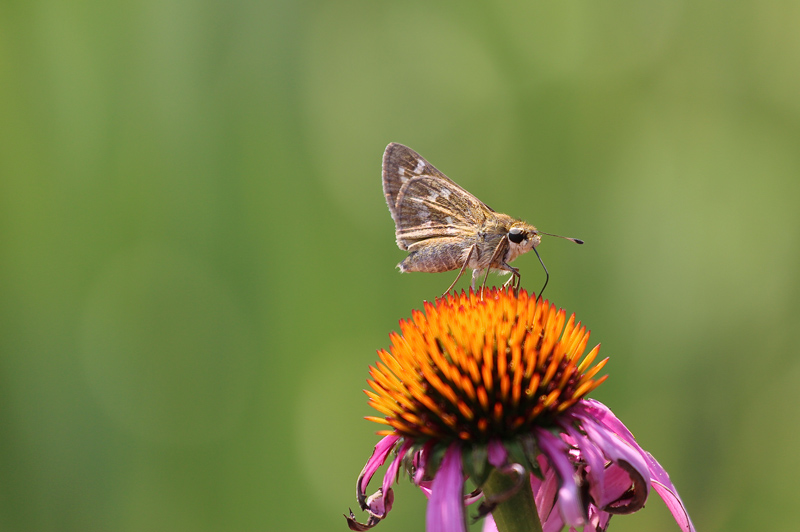
The fact is that this photographer, yours truly, had one of those moments when I created my very first macro image. That's when I began to take pictures of every bug that would stay in the view finder long enough. And when there was no bug available, I took pictures of flowers. I didn't realize that there are so many other interesting subjects to shoot in the tiny world of close up photography. Actually, almost any small object is worthy of your attention, including parts of your clothing like buttons and zippers as well as things like eyes and fingers. The only limitation is your imagination.

Here are a few hints to get you started on your macro photography journey with the Rebel T3i


  1. Start your engine. Even though this might sound too obvious, many of us get stuck in the mud, as it were, simply trying to figure out how to do something. While you could take lots of time to look for classes and study until you know all there is to know, instead, you can just start snapping. Training as the need arises is a great way to learn. Actually, "on the job" training works really well in photography.
  2. Permit poor results. This sort of goes "hand-in-hand" with hint #1. If you are afraid to make mistakes, you will never experience the thrill of what you discover through those mistakes. Some of your best shots will come as a result of something you did "wrong."
  3. Tripods are our friends. Close-up photos are prone to give the photographer lots of blur when trying to hand-hold the camera. In addition to the tripod, you can benefit from using the shutter release timer on your T3i, or you can get an inexpensive remote shutter release.
  4. Use Live View and focus manually. The Canon Rebel T3i has a fantastic feature that makes macro photography so much easier than most other cameras. It is the digital zoom feature when in Live View. Digital zoom is used to get a closer view of the subject so you can focus more accurately. At 5 times the magnification (or even 10 times), you can see clearly to focus. Personally, this is the feature that made me a believer in the Canon Rebel T3i.

That's it. Pretty simple, right? Hopefully, these few hints will get you started (and hooked).

Saturday, January 7, 2012

Street Photography Tips For Your Canon Rebel T3i

Street photography is one means to make use of your Canon Rebel T3i camera as a creative tool. But the camera is just half of the formula. You will also need a decent Canon Rebel lens for shooting portraits. That's where one of Canon's 50mm lens designs will qualify. There are three possibilities, those being the f/1.8, the f/1.4, and the f/1.2.
Street Photography Portrait #021
This was taken with a Canon 50mm lens on a 5D. Click the photo to see more.

Your choice as to which of these lenses you use is not as crucial as it might seem, considering the big difference in price. The f/1.8 is the cheapest bargain at about $100. After that the prices go up to about $350 for the f/1.4 and over $1000 for the f/1.2. Granted, the quality of build is undoubtedly different, but the image quality can be very close with all three.

But, in addition to the lens and camera, there's one more obstacle. If you are not comfortable talking with strangers, this could be a struggle for you to approach someone you don't know to ask for permission to make their picture. However, when you have tried it and succeeded more than once, it will become less difficult. This is particularly true once you see the amazing results. Street portraits are much more exciting than your common family portrait. That is, unless your cousin Jeremy or Auntie Claire is a colorful character and just as fascinating as some of the people you will meet at down-town locations and malls.

There are 5 camera tips which you might utilize to help you to be able to get those amazing shots after you get past the problem of shyness.
  1. Never ever head out without having the digital camera. All of us do it, but it is a better plan to keep on telling yourself that you shouldn't ever leave the house without it. After a couple of weeks of bringing the camera every time you depart office or home, and it is going to grow to be second nature. Absolutely nothing (well, practically nothing) more frustrating than coming upon a fantastic photo op out on the street when you don't have the picture taking tools in hand. And this doesn't imply that you have to carry the whole camera bag along with you. You simply need your Rebel and dependable Canon Rebel lens.
  2. You want to keep Canon 50mm lens on the dslr camera. You will find a couple of advantages of making use of this lens in lieu of one of the different choices. First, the 50mm is a nearly ideal portrait lens because of the high quality and huge aperture. And next, it's smaller and lightweight. It will not wear you out carrying it for a couple of hours. Furthermore, some folks can be put off by a large, showy piece of glass.
  3. Avoid the use of your flash. You will get natural shots with no flash, and on the street, this is also true. You can use the large aperture of the 50mm lens to obtain a good fast shutter speed, and if the brightness is very low, just boost the ISO of the Canon Rebel to speed up the shutter.
  4. Be ready before you decide to ask permission. Make sure all your camera configurations are accurate prior to approaching your prospect. It could actually ruin your possibilities if you have to stop and set fool with your camera as the subject is waiting for you.
  5. Have your model release forms ready. If you're going to display your photos in a public location, you need to obtain a release from the subject. The good news is that there is now an app for the iPad and the iPhone just for this. It is possible to go paperless!
That's it. You, too, could be a street photographer. Just go and shoot!

PS... You may want to visit here ==> http://www.canoneoslenses.org/50mm-lens-for-canon/ for more about the Canon 50mm lens lineup.

Thursday, December 22, 2011

Canon Lens Choice - Canon Telephoto Lens Or Normal Lens

I have come across some information that I thought was kind of confusing for those who are just getting their first Canon Digital SLR camera. There is some terminology that refers to a "normal" lens.

Canon Normal 50mm lens

Canon Telephoto lens (70-200 f/4.0L)

What is the difference in between a Canon Telephoto Lens and a Canon Normal Lens? Understanding the difference may help as you look to choose your next lens. However, it's also important to know which lens can serve your needs best in a given scenario.

Even if you are one of those who got a Canon digital SLR and never removed the kit lens, you can benefit from this info. (And, by the way, it is also time to take your camera off the Auto mode. However that conversation is for another day). If you are going to improve as a photographer, it's incumbent upon you to understand the abilities of the dslr camera along with the lenses and gear that goes with it.

A Canon standard lens is typically one of 35-50mm, with 35mm being the focal length that most directly matches what could be seen by the human eye without having any enhancements. Since the days of 35mm film photography, this has been a normal lens.

More recently, digital photographers have been employing the 50mm lens also as a standard lens. But this also comes with an clarification. Full frame cameras, such as those inside the Canon "Mark" series have a sensor that produces the exact same size photo as a 35mm film camera.

But you can find other dslr cameras that have scaled-down sensors. They are APS-C sensors, and they produce pictures which are magnified when compared to the full-frame sensors. In fact, they're increased by a element of 1.6x. With one of these types of cameras (a Rebel can be a very good illustration), a 50mm lens performs just like a 80mm and is now not normal. Likewise, a 35mm is more like a 56mm, which expands the "normal" definition.
This photo of Colby was taken with what may be considered a "normal" zoom lens at 53mm with my Canon Rebel T3i. Since the Rebel is a crop-sensor camera, 53mm is equivalent to 85mm in 35mm film terms. So, this is not technically a normal lens because 85mm falls into the medium telephoto range.


Telephoto is somewhat easier to clarify and comprehend. A Canon telephoto lens is one that captures the picture so that it seems to be bigger than what the human eye will see when standing in the exact same spot as the camera. Fundamentally, anything longer than 50mm is telephoto. In the instance of any crop sensor (APS-C) camera, 50mm has become telephoto, simply because, keep in mind, it performs like the equal of 80mm.

Canon telephoto lenses are generally deemed medium telephoto up to around 200mm, following which they're super telephoto.

By the way, it was once typical that a lens was as lengthy as the focal length designation. For example, a 200mm lens was literally 200mm long. Currently, because of the way the elements of glass are designed into the housing of the lens, it isn't any longer necessary for them to be that lengthy. This can be very obvious when you check out some telephoto zoom lenses that don't physically extend if the focal length is elevated.

When it comes to zoom, there are numerous extremely best-selling Canon telephoto lenses that zoom in through focal lengths. And some actually zoom from wide angle to telephoto (moving through the "normal" range as they do).

Now that you understand what the distinction is between the kinds of focal lengths, you have to make a decision which focal length is the one that is suited for your digital photography wants. Or, maybe a zoom lens is right for you to ensure that you can cover a dynamic variety of focal lengths because the needs change.

Saturday, December 10, 2011

Is It Possible To Make Money With A Canon Rebel?

A Good Canon Rebel Lens Will Help You Get Started


family photo with Canon Rebel lens
Family photos with your Canon Rebel lens are always a favorite
Looking for a good excuse to purchase that new Canon Rebel lens? This may be just what the doctor ordered. If you have a Canon Rebel digital SLR camera and enjoy taking pictures, chances are you have thought about making some extra cash with your photos. Digital photography as a hobby, is becoming more and more popular, and it's true that most people today have a digital camera. It is not hard to take your hobby to the next level, with the right knowledge and some creative energy. There are several different ways that you can use your camera to make money.

All you have to do is put together a little creativity and showmanship along with some salesmanship, and you can begin making money with your images.

How To Make Money With Your Digital Camera

Assuming that you are already a photography enthusiast, you may have the camera and accessories at hand to start. Naturally a camera is necessary, but the best one would be a digital SLR camera such as a Canon Rebel or even a more professional DSLR. A tripod is also important and an excellent printer or photo printing service.

In addition to the camera and accessories, you will need photo editing software. Adobe Photoshop is the absolute best in image editing software, but Corel also has a good product titled Paint Shop Pro.

It's important to recognize one thing before moving on. Do not be discouraged by those who say that making money in photography is too hard because just about everybody has a digital camera these days. While this is definitely true, you will be surprised at the number of people who do not know how to use that camera to get good quality pictures. They are willing to hire you to take those pictures for them!

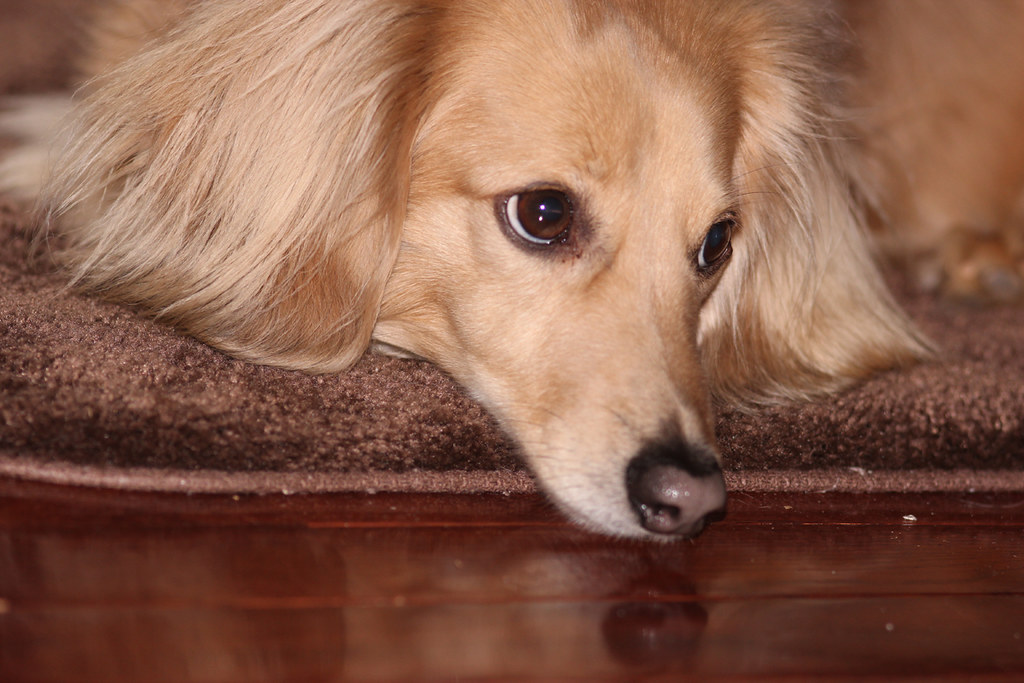
Taken with a Canon Rebel T3i and Canon Rebel Lens - Sigma 105mm macro
Pet photos are a great way to get started
Take a look at the images many people take. To be honest here; their pictures stink (excuse my French, but it really is true). Most people take photos that suffer from several issues like motion blur, sorry color, and badly posed subjects among other things. They do not comprehend the first thing about good composition. They do not understand the effects of lighting and flash, so you will find (blank) harsh shadows on the subject in the picture. Their photos are typically so awful they can't even be repaired with Photoshop.

Printing is an additional issue for most folks. Since the photographs are improperly done to begin with, the prints are also of poor quality. The individual who shot the images did not have a hint with regards to how you can use the camera settings to get the right resolution for publishing.

But, guess what? This can be just what gives an superb opportunity to step up and offer your services. Because you have the abilities needed to get very good pictures, all you've to do is supply some examples to demonstrate your abilities, and you may have gained a new customer!

Success - You Can Do This!

If you are still undecided about whether or not you can break into the "photography for cash" marketplace, pay attention to this. It happened to somebody who was considering whether or not she could generate income with her photography. She went to a little party, a special event for a friend's promotion. The host of the party had arranged for the girl to take a few pictures.

Many of the party guests had their very own cameras, and a few of them were even taking photos at the beginning. Yet as the celebration got started, these people ended up having such a good time they forgot about getting photos. And most of those photographs that they did get were just not really good.

Soon after the party, the photographer received a modest fee for her services. The plan was to print several proofs for that host as well as print a specific quantity of pictures. But she additionally uploaded the images she took to her web site and sent a web link to the photos to each of those that went to the get together. She received quite a few requests for images from those who came to the function, and all she had to do was permit those that wanted photographs to down load and print them. Piece of Cake!

It turned out to be quite a profitable outing for the photographer, and she didn't even have to bother with printing or delivering the pictures.

It became a life-changing get together for that young photographer.

But it's not unique. Anybody is capable of doing this! And it's even simpler if you get that new Canon Rebel lens you have been wanting. Develop a strategy, increase your confidence and photography abilities, and begin snapping!