The Canon EF-S Macro is a breed all its own. That's right, there is only one Canon EF-S Macro lens and it's a 60mm focal length. But maybe one is enough; it's a great lens.
Photographers come in all shapes and styles. Not every one is a professional. Of this I am guilty.
But I really like my Canon EOS 30D. And, while my camera is not a pro dslr camera, I have taken some genuinely excellent images with it. I have also earned some honors on different websites as "image of the day".
Searching for lenses for my own Canon dslr led me to take a look at the Canon EF-S macro lens selection. I find that EF-S lenses function extremely good, simply for the reason that they are produced specifically for my kind of camera. In the event you have a Canon Rebel, any specific model, or any of the XXD Canon cameras, you could use these extraordinary lenses on your current dslr camera.
The engineering has been specifically targeted for cameras with a APS-C sensor (this is the sensor that is in the entry-level to mid-level digital slr cameras referred to above).
To my surprise, there is only one Canon EF-S macro lens out there. It is the 60mm f/2.8 USM lens, and it is a specific macro lens. You can take photos of really small objects, bugs, flowers, and all manner of little things. On a personal note, macro photography is the reason I actually moved from a point and shoot camera to my very first Canon Rebel.
So, locating a close-up lens for my Rebel was huge on my priority list. I checked out the complete collection of lenses, some of which have a value as high as the camera alone... too much for my budget.
I settled on the Canon EF-S 60mm lens after examining the reviews and customer comments regarding it.
I have made plenty of mistakes in my life, but this was not one of them. The Canon macro 60mm lens is my most loved by far, not merely because of the macro pictures it creates, but also due to the fact it manages other sorts of pictures well, too. For example, when I want to take a portrait of one of the grandchildren, the Canon EF-S macro lens is my personal pick. It is the perfect focal length to get professional type portraits.
I also use my 60mm macro for taking a few product-type shots in my home-made light box. In spite of my crude set-up, the results are great.
While the Canon 60mm does take care of many photographic situations, it is not the perfect lens for every occasion. For instance, it is not my lens of choice for landscapes, and on excursions to the zoo, there will be a different lens on my Canon DSLR, however, I think that the Canon EF-S macro lens handles the majority of of my serious work with wonderful final results.
In addition, if I decide to upgrade to a newer camera (the Canon 7D is looking really good, and negotiations on terms with my better half have started), the EF-S lenses will work just fine.
As you can tell, I am a big fan of macro photography. And in my personal experience, I discovered that the Canon 60mm has truly done the job beautifully. It has an superb wide aperture of f/2.8 to produce fast shutter speeds for those elusive bugs and butterflies. It also yields a wonderful blurred background, the objective of a respectable close-up image. The USM (ultra sonic motor) gives speedy focus, again, nailing the bug shots with a pretty good "keeper" rate.
I would not be reluctant to recommend a Canon EF-S macro 60mm lens to virtually any Canon camera user. It is an awesome lens. Go to www.canoneoslenses.org/macro-canon-lens/ for a much better look.
Saturday, September 25, 2010


Saturday, September 18, 2010
Cheap Digital SLR - Pentax K-x vs Nikon D3000
 |
| Nikon D3000 vs Pentax K-x - Both are Cheap DSLRs |
Pentax K-x vs Nikon D3000 makes a unique comparison.
What do you think?
Nikon has a fantastic reputation for producing quality digital SLRs. Thousands of photographers think about Nikon first. And the Nikon D3000 is competitively priced as an entry level digital SLR. Let me just throw out this question for you to consider - How much of the "value" of the D3000 is because of their huge marketing campaign?
Pentax seems to depend on just giving good quality and letting the product market itself. Well, not totally, but their marketing is nothing near what Nikon puts out.
So, how do these two entry-level digital SLRs really compare?
There are a few areas where the Pentax K-x dominates with respect to features and benefits:
- The first is that image stabilization is IN the camera. For Nikon, you have to purchase lenses with the VR (vibration reduction) technology. Lots of Nikon lenses are being produced with VR (vibration reduction), but many do not have it. However, with the Pentax, you can attach virtually any lens (even older ones - up to 40 years old), and you will have... image stabilization.
- Lenses - all Pentax lenses, even lenses made by other manufacturers for Pentax digital SLRs, work on a Pentax K-x. This is not true for the Nikon D3000. It seems like I just said this above, but there is another issue to consider. This has nothing to do with IS or VR. There is a group of lenses that are made for Nikon cameras like the D3000 that only work on the cameras that have a "crop" sensor. Basically, this means that if you eventually upgrade to a high end Nikon, you would have to replace some, or all, of your lenses for the higher end digital SLR Nikon camera.
- Video - Yes for Pentax, no for Nikon.
- Live View (this allows you to compose your images in the LCD panel in real time) - another no brainer - Yes for Pentax, No for Nikon.
- Price - advantage... neither. The price of each is very similar.
In what areas does the Nikon D3000 dominate the Pentax K-x?
Well, there is one. This one point is a point that many photographers think should have been included. It is Auto-Focus points. They are visible in the Nikon D3000 but not in the Pentax K-x. These AF points let the photographer see where the camera is setting its focus point. To some folks, this is very important.
In truth, the Pentax is more of a higher end entry-level DSLR than the Nikon D3000. The Nikon D5000 does have all the missing features that the D3000 does not have when compared to the Pentax. That all the features except the price. The D5000 is much more expensive.
For a side-by-side comparison of Pentax K-x vs Nikon D3000, CLICK HERE? The link will take you to www.digital-photographic-resources.com/cheap-dslr.html
Wednesday, September 15, 2010
Buy a Canon 60D
This is an awesome time for photographers because you can now buy a Canon 60D.
The 60D is a kind of hybrid that will fit nicely between the Canon Digital Rebel T2i and the Canon 7D. Both the feature set and the price are just about half way between those two models.
The Canon 60D has a great video capability that allows the same quality as a dedicated camcorder. For photographers who do video, this is really good news.
There is also a new 3" LCD with an articulating screen. This just means that you compose your shot from some very unique perspectives. You do not have to be directly behind the camera in order to see the LCD screen because you can twist it into viewable positions either up high or down low.
The new 60D is compatible with all EF and EF-S lenses.
It is being targeted toward semi-pro and amateur photo enthusiasts. If you are one of those, you will definitely want to take a peek at one.
They are on sale now at major camera stores.
Order online at Amazon or B & H Photo by using the links below.


The 60D is a kind of hybrid that will fit nicely between the Canon Digital Rebel T2i and the Canon 7D. Both the feature set and the price are just about half way between those two models.
The Canon 60D has a great video capability that allows the same quality as a dedicated camcorder. For photographers who do video, this is really good news.
There is also a new 3" LCD with an articulating screen. This just means that you compose your shot from some very unique perspectives. You do not have to be directly behind the camera in order to see the LCD screen because you can twist it into viewable positions either up high or down low.
The new 60D is compatible with all EF and EF-S lenses.
It is being targeted toward semi-pro and amateur photo enthusiasts. If you are one of those, you will definitely want to take a peek at one.
They are on sale now at major camera stores.
Order online at Amazon or B & H Photo by using the links below.

Tuesday, August 24, 2010
Tamron 28-75 Review
Shopping for a less expensive lens with Canon "L" lens level of quality?
 |
| Tamron 28-75mm Lens for Canon |
How do you really feel about third party lens companies?
This Tamron 28-75 Review is a result of my love affair with third party producers. That lens is attached to my Canon 30D most of the time.
At the time that I made a decision to move from a point and shoot camera to a digital SLR, I determined that I would not get the kit lens that came with the Canon Rebel 300D. At the time, the kit lens was not highly regarded at all by most photography websites.
The Tamron 28-75mm lens for Canon rose to the top of the heap as I did my research. This was based on several factors, not the least of which was my budget. I have upgraded my camera body a couple of times, but my trusty 28-75 lens has remained my prime all purpose lens.
Since it is not a Canon L lens, it does not get the respect that those highly revered lenses get in all the reviews, however, this little Tamron lens is really excellent.
There are two things I have come to appreciate about my main walk-about lens.
 |
| Morning Glory - Taken with Tamron 28-75mm Lens for Canon |
Next is the rapid focus. I have used some Canon L lenses, and my Tamron performs just as well as those costly models. The bokeh is really nice too. If you are not familiar with the term "bokeh", bokeh is when the background of a photo is pleasantly blurred. This happens when you shoot your picture at a fairly wide aperture (like 2.8). The plane of focus is quite shallow, rendering the background and foreground as blurry.
Not too long ago, I was talking with a photographer buddy of mine who was doing some work at my school. He knows that I am also a photographer. He was not using his tripod as he normally did. That's when he told me that he had just bought this "brilliant little lens" for his Canon 5D. He was so impressed with his new lens that he was passionately recommending it to all his photography friends.
The lens he was talking about was the Tamron 28-75mm lens for Canon digital SLRs. I was quite shocked that a pro photographer would even think to attach a third party lens to such an extraordinary camera as the 5D.
Thinking back though, I should not have been that shocked. Of course, I have been defining the virtues of this superb lens for years. But I had always thought of the Tamron 28-75 lens as a beginner Canon digital slr lens.
 |
| This close crop of a Sunflower gives you an idea of how sharp the images are with this lens. |
Just consider it, you will be happily surprised after shooting a few frames at how effectively the lens handles, the high quality images that it produces, the quick focus, and the satisfying bokeh. Oh, and the value. You will save a bundle of cash if you buy this lens instead of an L lens of the same focal length and aperture.
The Tamron 28-75 lens for Canon digital slr cameras is an excellent choice as a less expensive walk around lens. Be sure to compare it to some other all purpose Canon EOS lenses before you make your final purchase decision.
Tuesday, August 17, 2010
The 18-200mm Canon Lens - This Super Zoom Lens Does It All
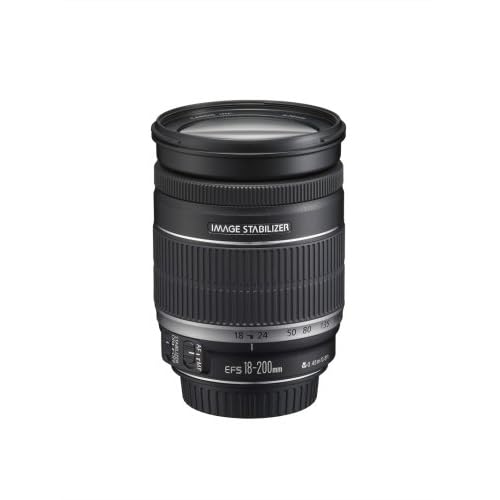 |
| This is it, the 18-200mm Canon Lens |
While we refer to it as the 18-200mm Canon lens, it has an official name. It is a Canon EF-S 18-200mm f/3.5-5.6 IS
 telephoto lens.. How would you like to have to live up to a label like that? As we examine the name, we see EF-S. This implies the lens is made for Canon's entry level cameras, such as the Canon Digital Rebel sequence and its 50D digital SLR (along with the earlier xxD versions). That means that you can not use this general walk around lens on the more high quality models such as the Canon 7D and the full frame models.
These Super-Zoom lenses are strongly regarded as holiday or travel lenses because they are "one lens fits all" alternatives. You can leave your camera bag back at the hotel room..
When you have to stop and change lenses to match the circumstances, it is likely that the photo op will evaporate before you can take advantage of it. With the 18-200mm Canon lens, you don't have to fret about which lens is affixed to your camera. It is fantastic for getting those quick, fleeting shots.
In fact, having to change lenses is one of the blessings AND the curses of digital SLR owners. We actually buy the cameras so we can change the lens, then we are frustrated when we have to.
 |
| 40D at 200mm : Lilac-breasted roller in Kruger National Park, South Africa. Pleasing bokeh in the background. (from images at amazon for Canon 18-200mm lens) |
To start with, as pointed out is the focal range, which is 11x. Taking into consideration the monumental variance in range, the image quality is outstanding.
Also, there is IS (image stabilization) which is supposed to give you an additional 4-stops of aperture without having to use a tripod. This is important because the widest aperture is only f/3.5, and it increases from there to a max of f/5.6. This is typical of the super-zoom lenses, whether Canon or some other manufacturer.
One more benefit is the bokeh that is produced when using a wide aperture. Photographers are always comparing bokeh. Briefly, it is when you try to get the main subject of your photo in sharp focus and have the other areas of the photo in a pleasingly blurred focus. The 18-200 does a pretty good job with this, but it is not considered the best.
The last benefit has to do with a comparison to the "kit lenses" that Canon promotes. Sometimes new buyers purchase the 18-55mm starter lens and an additional 55-250mm lens for the mid-range focal lengths. These two lenses are not bad as far as image quality goes, but they are not high quality construction.
The Canon 18-200mm lens is far better constructed than the kit lenses.
The Down Side
There are some concerns to consider. You will find this true of the majority of super-zooms, whether they are Canon, Nikon, Sigma, or Tamron lenses. There is a compromise in image quality in order to get the wide focal range. Most will have barrel distortion at the wide angles and chromatic aberration issues at both the shortest and the longest focal lengths.
In spite of these issues, the images are not really bad. In fact, they are quite good. The issues are barely noticeable to the novice. However if you are searching for the pixel-perfect image, you will possibly need to fork out more money or work with a more specific focal length lens.
What about third party lenses.
Third party lens makers have designed some really good lenses that fit Canon digital SLR cameras. If the positive aspects and problem areas are the same, why don't you give some thought to saving some money for one of those? It's a thought.
As you look at the 18-200mm Canon lens, you will be pleasantly surprised at how well it really does perform.
But do take a look at the other lenses in the same category. You can do that at Canon EOS Lenses.
Monday, August 9, 2010
Portrait Photography - Use The Right Portrait Lens
If you have thought about doing portraits with your Canon EOS digital SLR camera, you are not alone. Portraiture may be the most popular photography applications pursued by amateurs and pros alike.
It may surprise you to know that having the consummate Canon portrait lens is not the most vital part of getting a great portrait. But a good lens will unquestionably go a long way toward getting you to that great image.
The glitz and glamor of portrait photography is what attracts the attention of many. If you are good and make the right connections, you could be in the company of some very well known people. Not like the paparazzi, who are the bottom dwellers of the paid photography industry (author's opinion). Besides, what they do is not portrait photography.
Most portrait photographers don't shoot famous people though.  There is plenty of work in the field that does not include actors, singers, and other glitzy individuals.
Other portrait niches include individuals, family photos (Olan Mills does not have a monopoly here), high school senior photos, babies, and even pet portraits. And sports portraits is a huge opportunity, too. You can truly find a unique niche in portrait photography.
Depth Of Field - Your #1 Goal
Portrait photographers know that the lens is just as key as the digital SLR camera it is attached to. Good portrait images have specific qualities that help to draw attention to the subject, or model. The first, and probably the easiest way to make that happen is to use a narrow depth of field. This means that the plane of focus is shallow, putting the other objects in the photograph out of focus. That sharp area of focus unconsciously draws the eye of the viewer.
One of the reasons for this shallow depth of field is the quick speed of the shutter. This is a feature of good portrait lenses. Fast shutter speed happens as a result of getting the lens to open wider. The lens opening is called the aperture. A good number for the aperture would be f/2.8 or wider (smaller = wider). In fact, the better lenses have apertures as wide as f/1.2. (And as the number gets smaller, the price tag gets bigger.) If you want a sleek and sexy photo with an out of focus background, a good place to start is with a wide aperture. When you show the photo to your subject, they will feel very special. And you will feel like you accomplished a portrait that could go head to head against the pros.
Focal Length - Another Key Element of Portrait Photography
Another feature you will want as a portrait photo shooter is the right focal length lens. There are two types of lenses, single (prime) or zoom. Many pros use only prime lenses when doing portraits. If choosing a prime lens, 50mm would be the shortest length to choose. Any shorter and you have to get too close to your model. If you have a lens between 75mm and 150nn, you are in what most photographers consider the right focal length for portraits. This gives the photographer a better combination of depth of field, distance from the subject, and flexibility in choosing the perspective.
If the lens does not have a long enough focal length, it could cause facial features that are out of proportion. Everyone has seen those images of the cows where the cow's nose looks way out of proportion when compared to the rest of the animal. This technique is cute, and done purposefully, employing a wide angle lens and getting right up next to the subject. We laugh when we see these kind of photos, but we would not laugh if it was OUR face blown out of proportion. People are way too vain.
Zoom lenses are also popular among many photographers who soot portraits. One of the most popular is the Canon 70-200 f/2.8 zoom lens. Using a lens with such a wide selection of focal lengths can add so much flexibility to your set up.
The good news is that just about any lens can double as a portrait lens. If you know how to pull it off, you can take great portraits with you cell phone.
Better Backgrounds - A Nifty Little Trick
To get that really special portrait, you need a blurred background. Try putting more distance between the model and the background. You want as much distance as possible between subject and background. This compensates for the aperture component. The background will be blurry in spite of the aperture because of the distance.
The mere fact that you tote that awesome digital SLR gives your family and friends reason to believe that you can take great portraits. Actually, you can. But the job can be done so much easier with the right lens, a portrait lens.
It may surprise you to know that having the consummate Canon portrait lens is not the most vital part of getting a great portrait. But a good lens will unquestionably go a long way toward getting you to that great image.
The glitz and glamor of portrait photography is what attracts the attention of many. If you are good and make the right connections, you could be in the company of some very well known people. Not like the paparazzi, who are the bottom dwellers of the paid photography industry (author's opinion). Besides, what they do is not portrait photography.
Most portrait photographers don't shoot famous people though.  There is plenty of work in the field that does not include actors, singers, and other glitzy individuals.
Other portrait niches include individuals, family photos (Olan Mills does not have a monopoly here), high school senior photos, babies, and even pet portraits. And sports portraits is a huge opportunity, too. You can truly find a unique niche in portrait photography.
Depth Of Field - Your #1 Goal
Portrait photographers know that the lens is just as key as the digital SLR camera it is attached to. Good portrait images have specific qualities that help to draw attention to the subject, or model. The first, and probably the easiest way to make that happen is to use a narrow depth of field. This means that the plane of focus is shallow, putting the other objects in the photograph out of focus. That sharp area of focus unconsciously draws the eye of the viewer.
One of the reasons for this shallow depth of field is the quick speed of the shutter. This is a feature of good portrait lenses. Fast shutter speed happens as a result of getting the lens to open wider. The lens opening is called the aperture. A good number for the aperture would be f/2.8 or wider (smaller = wider). In fact, the better lenses have apertures as wide as f/1.2. (And as the number gets smaller, the price tag gets bigger.) If you want a sleek and sexy photo with an out of focus background, a good place to start is with a wide aperture. When you show the photo to your subject, they will feel very special. And you will feel like you accomplished a portrait that could go head to head against the pros.
Focal Length - Another Key Element of Portrait Photography
 |
| Canon 70-200mm f/4 @120mm |
If the lens does not have a long enough focal length, it could cause facial features that are out of proportion. Everyone has seen those images of the cows where the cow's nose looks way out of proportion when compared to the rest of the animal. This technique is cute, and done purposefully, employing a wide angle lens and getting right up next to the subject. We laugh when we see these kind of photos, but we would not laugh if it was OUR face blown out of proportion. People are way too vain.
Zoom lenses are also popular among many photographers who soot portraits. One of the most popular is the Canon 70-200 f/2.8 zoom lens. Using a lens with such a wide selection of focal lengths can add so much flexibility to your set up.
The good news is that just about any lens can double as a portrait lens. If you know how to pull it off, you can take great portraits with you cell phone.
Better Backgrounds - A Nifty Little Trick
To get that really special portrait, you need a blurred background. Try putting more distance between the model and the background. You want as much distance as possible between subject and background. This compensates for the aperture component. The background will be blurry in spite of the aperture because of the distance.
The mere fact that you tote that awesome digital SLR gives your family and friends reason to believe that you can take great portraits. Actually, you can. But the job can be done so much easier with the right lens, a portrait lens.
Sunday, August 1, 2010
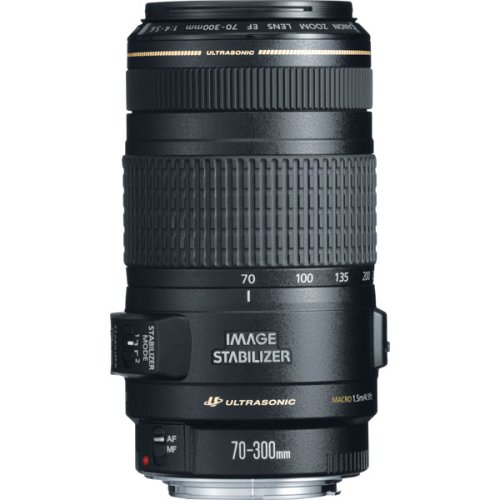
Canon 70-300mm Digital SLR Lens - A Quiet Surprise
 |
Check Price at Amazon |
Recently discovering the Canon 70-300mm mid-range zoom lens came as just such a surprise.
In fact, it could be the best kept secret among photographers. You rarely hear anyone proclaiming the greatness of this little lens. There is nothing about this lens that screams "outstanding." It is rather drab. And yet, when you look deep, you see the subtle praises.
The reason may be that the lens is not that impressive or glamorous in appearance, and "real" photographers want an attention-getter on the front of their prized digital SLR.
Perhaps it's even because there is nothing special about the price. It's not too high or too low, it's just right.
No matter the reason, the 70-300mm Canon lens is well worth taking a look at.
When you look for impressive, the first thing that draws attention is the image quality. This should be the number one consideration for any lens. And this one is rated as good, or nearly as good, as the Canon "L" lenses.
What you will generally see on blogs and forums is how simple the lens actually is. Comments like, "I thought it was a toy," express the first impressions of many first-time users.
You have heard that first impressions are lasting ones. But that is not necessarily true with this lens. Once they shoot a few frames, their opinion changes. The reason for the change in attitude is not only the wonderful image quality, but the addition of IS (image stabilization) and USM (ultrasonic motor). These are impressive qualities shared by the most advanced Canon lenses.
If you are one who likes to shoot mostly hand held shots, you will really like these features.
My favorite story about the 70-300mm Canon lens comes from a guy who found his lens at a garage sale. He was not familiar with the lens, but he decided to get it for a relative who was just getting into photography. He figured because of the price and the feel of the lens that it was not a great lens. The person running the garage sale had no information about the lens. Without any useful information at all, the photographer decides to buy the lens. Price was not mentioned, but under those circumstances, it was probably the deal of the century (except for those Ansel Adams photos that were valued at $4 million).
Upon arriving home, he put it on his Canon 5D to see if it even worked. Took a few shots. To shorten a rather long commentary, the end result is that the photographer never turned the lens over to his young relative. He deemed the lens too good for his relative and kept if for himself.
Surprises are great when they come like this. Garage sales can be the source of some real finds.
For more about the Canon 70-300mm f/4-5.6 IS USM, visit www.canoneoslenses.org.
Happy Shooting!
Subscribe to:
Posts (Atom)
